What Face Shape Do I Have? A Practical Face Shape Test Guide
A measurement-first guide to reading your face shape without relying on one selfie, one label, or a generic quiz result.

In this guide
Searches like face shape test and what face shape do I have usually come from a practical need: choosing glasses, a haircut, makeup placement, beard style, or a more accurate AI face reading. The hard part is that many quizzes treat face shape as a personality label instead of a geometry question.
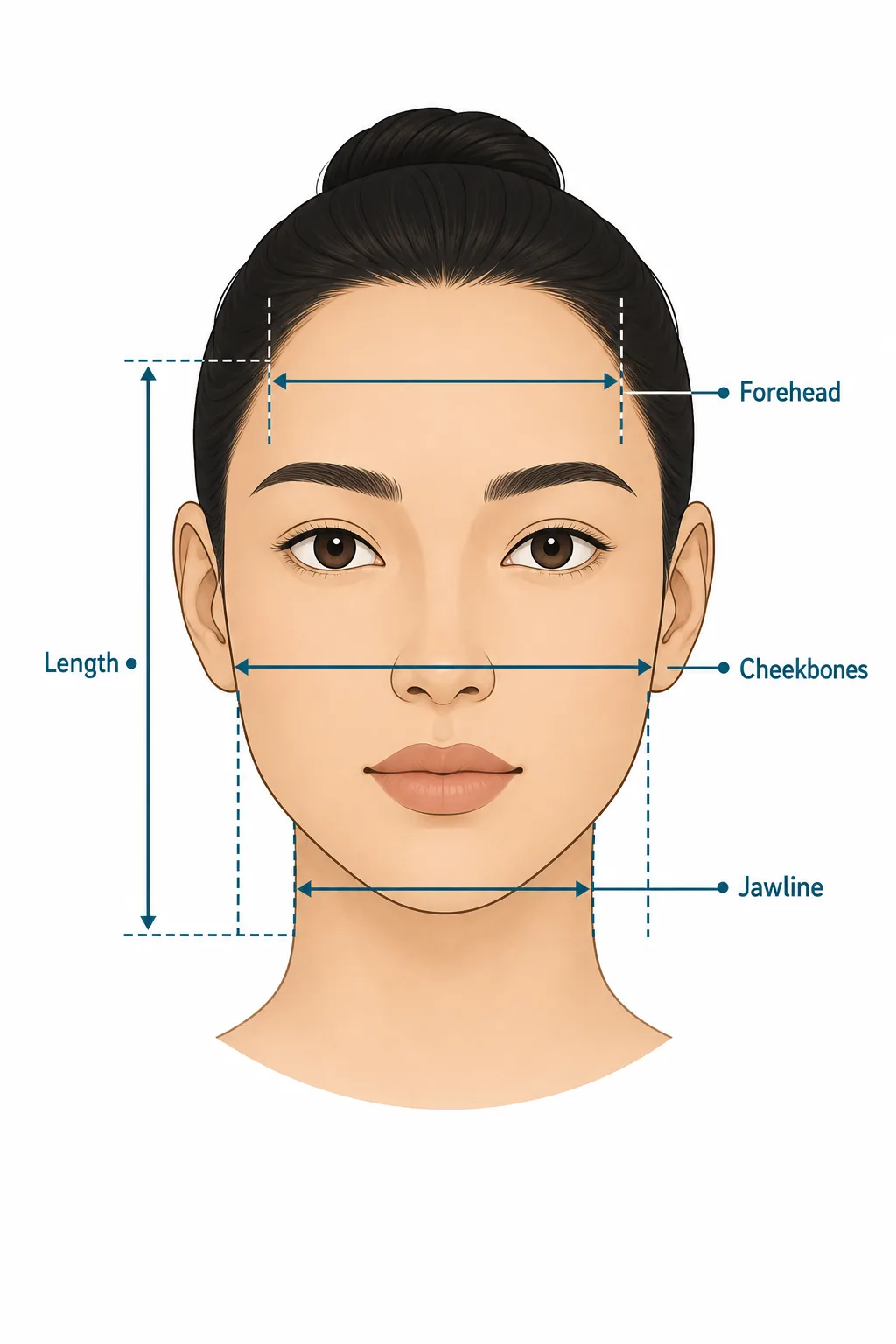
A useful face shape test starts with proportion. You compare the length of the face with the width of the forehead, cheekbones, and jawline, then look at whether the jaw is rounded, angular, narrow, or softly tapered. A single selfie can mislead you because lens distance, head tilt, hair volume, and expression change the visible outline.
This guide keeps the result practical. It explains the main face shapes, shows what to measure, gives a comparison table, and explains when an AI face analysis can support the decision without pretending that one label defines your appearance.
Start With Four Face Shape Measurements
Use a straight-on photo with your hair pulled away from the sides of your face, or stand in front of a mirror with a soft tape measure. You do not need perfect millimeter accuracy. You need the relative order: which part is widest, whether the face is clearly longer than it is wide, and how the jawline finishes the outline.
Measure face length from the center of the hairline to the bottom of the chin. Measure forehead width across the widest visible part above the brows. Measure cheekbone width across the highest or broadest part of the cheeks. Measure jawline width from one jaw angle to the other, or estimate it by comparing how broad the lower face looks against the cheeks.
Do not chase exact numbers
Face shape is a proportion category, not a medical or identity measurement. Relative width and contour matter more than decimal-level precision.
-
Face length
Longer than all widths points toward oval or oblong; similar to width points toward round or square. -
Forehead width
A noticeably wider forehead with a narrower chin often suggests heart or inverted triangle tendencies. -
Cheekbone width
The widest cheekbones with a narrower forehead and jaw often point toward diamond. -
Jawline width and angle
A broad angular jaw supports square; a softly curved jaw supports round or oval.
Face Shape Chart: Match the Pattern, Not Just One Feature
Most people sit between categories. Use this chart as a pattern match, then check the common mistakes section before you decide. If two labels both seem plausible, the more useful result is often a hybrid such as oval-round, square-oval, or heart-diamond.
The best face shape test result is the one that helps you make a practical choice. For example, glasses advice may care more about jaw angle and cheek width, while haircut advice may care more about face length and forehead balance.
| Face shape | Typical measurement pattern | Look for this outline | Usually confused with |
|---|---|---|---|
| Oval | Face length is greater than width; forehead and jaw are softly balanced | Soft taper, no very sharp corners | Round or oblong |
| Round | Face length and width are close; cheek area is full | Curved jaw and soft sides | Oval or square |
| Square | Forehead, cheekbones, and jawline are similar in width | Strong jaw angles and straighter sides | Round or rectangle |
| Heart | Forehead is wider than jaw; chin tapers | Upper face is visually broader | Diamond or oval |
| Diamond | Cheekbones are widest; forehead and jaw are narrower | High cheek focus with narrower chin | Heart |
| Oblong | Face length is clearly greater than width | Long vertical outline, often straighter sides | Oval or rectangle |
How to Measure Your Face Shape More Fairly
Use two sources: one mirror check and one straight-on photo. The mirror helps you see your real outline; the photo helps you compare distances without moving your head. Keep the camera at eye level and use the back camera when possible, because wide-angle front cameras can stretch the center of the face and narrow the edges.
Pull hair away from the jaw and forehead, relax your expression, and avoid a high or low camera angle. If the result changes between photos, trust the set with the most neutral angle rather than the image where you like your expression best.
-
Take one neutral photo
Face the camera directly, keep both ears equally visible if possible, and avoid tilting your chin. -
Mark the widest points
Compare forehead, cheekbones, and jawline before deciding which category dominates. -
Check the jaw contour
Round, square, pointed, and tapered jaws can change the final label even when widths look similar. -
Repeat once
A second neutral photo catches lens and posture errors without turning the test into overanalysis.
Common Face Shape Test Mistakes
The biggest mistake is judging from hair volume. Hair can make a narrow forehead look wider, hide cheekbone width, or soften a square jaw. Another common mistake is using a smiling selfie: a smile lifts cheeks, changes jaw tension, and can make the face look rounder or wider than it is at rest.
Do not let one flattering or unflattering photo decide the label. A face shape guide should reduce confusion, not make you inspect every small asymmetry. If your face appears different across angles, write down the stable features: longest dimension, widest zone, and jaw contour.
Health note
If your face shape or symmetry changes suddenly, especially with drooping, numbness, pain, or weakness, treat that as a health concern rather than a styling question.
- Do not classify from a three-quarter angle photo.
- Do not include hairstyle width as cheekbone width.
- Do not assume a sharper jaw automatically means square if the lower face is narrow.
- Do not treat face shape as an attractiveness score; it is only an outline category.
How AI Face Analysis Can Support a Face Shape Test
AI can help by detecting landmarks consistently: face outline, cheek width, jaw corners, chin point, and relative facial length. That makes it useful when you want a second reading after your own measurement check. It is less useful when the photo is blurred, filtered, angled, or partly covered by hair, glasses, hands, or heavy shadow.
Use the AI result as a structured clue, not a final identity label. If the tool says oval but your jaw is clearly broad and angular, the practical answer may be square-oval. If it says heart but your cheekbones are the widest point, compare heart and diamond advice before choosing glasses or hair references.
Try it with a neutral photo
For a broader face reading, upload a clear front-facing image to the How Normal Am I AI test, then compare the score notes with your own face shape measurements.
How to Use Your Face Shape Result
Use your result as a design shortcut. Oval and oblong faces often use width, layers, or frames to balance length. Round faces often use vertical lines or angular contrast. Square faces often use softness or rounded frame edges when the goal is balance. Heart and diamond faces often focus on balancing forehead, cheekbone, and chin emphasis.
These are starting points, not rules. Personal style, hair texture, cultural preferences, gender presentation, and comfort matter more than a rigid chart. The best use of a face shape test is to create better options to try, not to limit what you are allowed to wear.
| Goal | Use the face shape result for | Avoid overdoing |
|---|---|---|
| Glasses | Frame width, corner shape, and bridge placement | Choosing only by label without checking fit |
| Hair | Volume placement, layers, bangs, and length | Copying a celebrity with different hair density |
| Makeup or beard | Contour placement, softness, and lower-face balance | Trying to hide natural structure |
| AI face reading | Checking whether outline notes match your own measurements | Treating the result as a fixed verdict |
Check your face with a neutral photo
Use the guide first, then compare your outline with an AI face analysis result for a more complete reading.
Try How Normal Am IFace Shape Test FAQ
References & Further Reading
- American Academy of Dermatology advice on checking skin changes and when to seek professional guidance. - AAD
- CDC FAST warning signs for sudden facial drooping and stroke symptoms. - CDC
- Related guide explaining how AI face scores should be interpreted alongside photo quality and visible features. - How Normal Am I score guide
Related Guides
Face Symmetry Test Guide
Learn why symmetry readings change with angle, light, and expression.
Read the symmetry guideAverage Face Meaning
Understand how average, normal, and attractive describe different ideas.
Read the average face guideUpdated: 2026-06-18
Back to Home