How Accurate Is How Normal Am I? What the AI Test Can and Cannot Tell You
A practical guide to understanding AI face-test accuracy, photo bias, score drift, and the right way to read one result.

Table of Contents
A lot of users search is How Normal Am I accurate because the score feels personal. If the number is higher than expected, they want to believe it. If it is lower than expected, they want to know whether the tool failed or whether the photo says something real.
The honest answer is more nuanced than yes or no. An AI face test can be useful for reading visible patterns in one image, but accuracy depends on what question you expect it to answer. It is much better at comparing photo-based facial geometry than deciding how attractive you are in real life.
This guide explains when the tool is fairly reliable, when results drift, how to test more carefully, and which kinds of conclusions the score cannot support.
Short Answer: Is How Normal Am I Accurate?
Yes, but only in a limited photo-analysis sense. The tool can detect a face, estimate landmarks, compare visible proportions, and return a score that often tracks photo quality and facial balance reasonably well.
No, if you expect it to give a final answer about beauty, social appeal, or your value as a person. It cannot see personality, movement, styling in real life, charisma, or the context in which other people perceive you.
Best way to read the score
Treat the result as a structured reading of one image, not a life verdict. The score is strongest as a comparison tool across similar photos.
What Accuracy Means in an AI Face Test
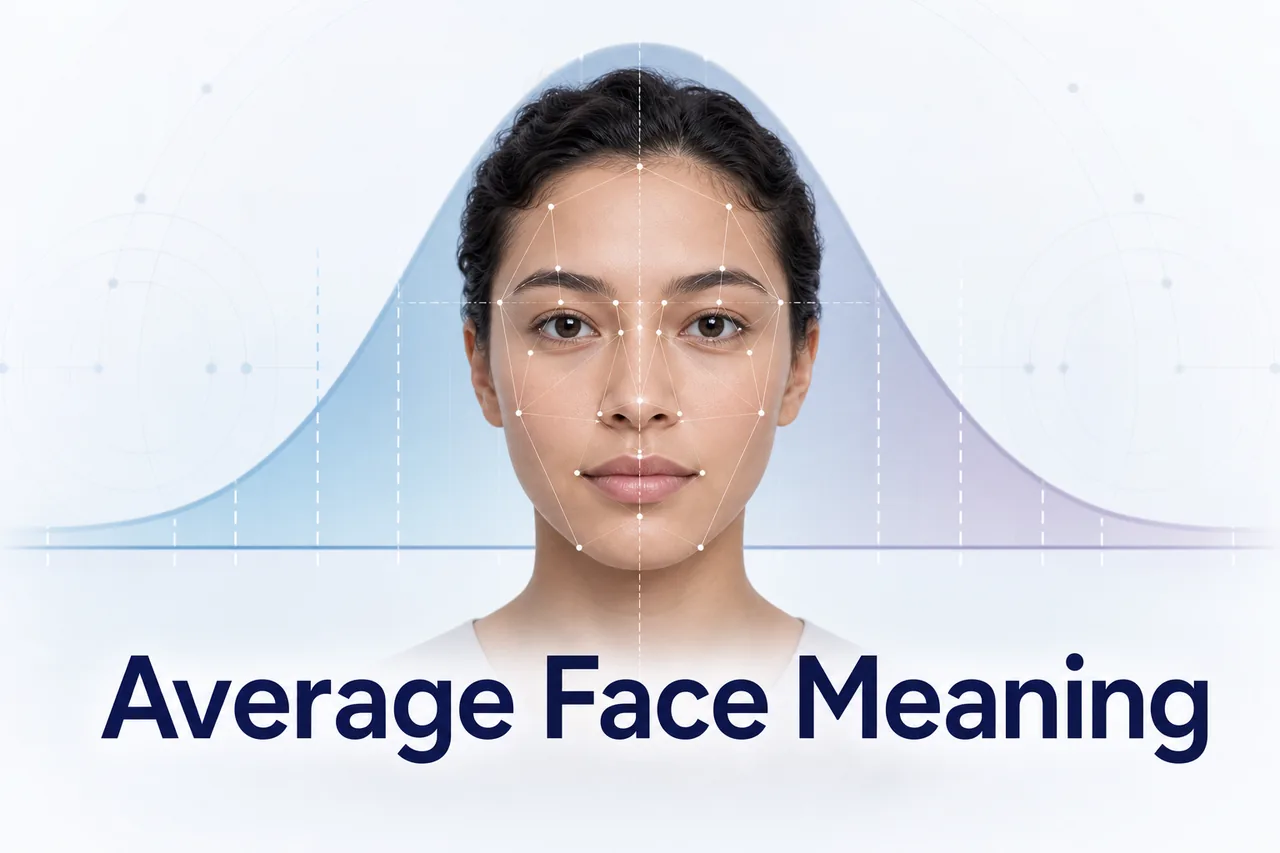
Accuracy is not one thing. For a face-analysis tool, there is input accuracy, measurement accuracy, and interpretation accuracy. A tool may detect landmarks consistently while users still misread the meaning of the final score.
That is why the same product can be useful and limited at the same time. It may be fairly good at ranking cleaner photos above worse photos, or more balanced images above distorted ones, while still being unable to define real-world attractiveness with scientific certainty.
| Type of accuracy | What the tool can do | What it cannot prove |
|---|---|---|
| Photo-reading accuracy | Detect visible face landmarks and compare image-based proportions | Prove how everyone will see you in real life |
| Consistency accuracy | Return similar ranges when photo conditions stay similar | Stay stable across very different angles, filters, and lighting |
| Interpretation accuracy | Help you compare one photo with another | Define your worth, personality, or mental state |
When the Result Is More Reliable
The test becomes more trustworthy when you reduce noise in the image and keep the comparison fair. These conditions help the model see what it is actually scoring.
Clear front-facing photo
A straight-on selfie with your whole face visible gives the AI cleaner landmarks and fewer hidden proportions.
Soft even lighting
Good front lighting reduces harsh shadows that can confuse the eyes, nose bridge, jawline, and skin edges.
Natural camera distance
A little distance lowers selfie distortion so the tool is reading your face instead of an exaggerated lens effect.
Several similar photos
A cluster of similar scores is more trustworthy than one dramatic result from a single upload.
If you keep these conditions stable, the score usually becomes more consistent. That consistency matters more than chasing one unusually high or low number.
Why Results Change Between Photos
People often think a score change means the model is random. More often, it means the input changed enough to alter what the system could detect.
-
Angle shifts symmetry
A small head turn can make one side of the face look wider or higher, which changes how the tool reads balance. -
Close selfies distort proportions
When the camera is too close, the center of the face can look larger and the edges can look narrower. -
Lighting hides facial landmarks
Hard side light or shadows can blur the eye area, jawline, or nose contour, which affects the measurement. -
Expression changes geometry
A smile, squint, lifted brows, or tension in the mouth changes the visible distances between key features. -
Filters and beauty effects rewrite the input
Smoothing, slimming, and shape-editing filters create a different face for the model to score.
How to Test More Fairly
If you want the best possible reading, run the test like a mini experiment instead of a one-shot emotional check.
| Step | What to do | Why it helps |
|---|---|---|
| 1 | Take 2-3 front-facing photos in soft light | Creates a fair baseline instead of one lucky or unlucky upload |
| 2 | Keep expression neutral and head level | Reduces geometry changes caused by pose |
| 3 | Avoid beauty filters and heavy editing | Prevents the model from scoring an altered face |
| 4 | Compare the score range, not one number | Shows whether the result is stable enough to trust |
| 5 | Read the explanation pages after testing | Prevents overreacting to a raw score |
This approach makes the output more useful. Instead of asking whether one number is true, ask whether the result stays stable under fair, repeatable conditions.
What Not to Trust the Tool With
Even a good AI face test has hard limits. It should not be used as proof for broad claims that go beyond the photo.
- Do not use it to decide whether you are attractive in every real-life setting.
- Do not use it to judge your mental health, social worth, or whether you are normal as a person.
- Do not use one score to compare yourself obsessively with strangers or edited influencer photos.
- Do not assume a low score means the model found something medically or psychologically wrong.
If a result feels upsetting, the safer move is to step back, review the photo conditions, and remember the score is only a narrow image-based estimate.
Run a cleaner test
Upload a clear selfie, compare a few similar photos, and use the result as a reference point rather than a final judgment.
Start the Free TestFrequently Asked Questions
About the Author
Sarah Mitchell
Beauty tech journalist · 8+ years covering AI and aesthetics
Sarah writes about AI face analysis, beauty technology, and the limits of automated appearance scoring. Her work focuses on helping everyday users understand what facial analysis tools can measure, what they cannot measure, and how to interpret results without overreacting to one number.
References & Context
- American Psychological Association overview of body image and appearance concerns - APA body image topic
- General overview of facial attractiveness research and averageness - Averageness overview
- Practical background on reading AI appearance scores responsibly - Am I Normal Guide
Last updated: 2026-05-31
Back to How Normal Am I