Am I Pretty Quiz: How to Read a Pretty Scale Test Without Overthinking It
A practical guide to AI beauty scores, photo-based pretty ratings, and the safest way to interpret one result.

Table of Contents
People search for an am I pretty quiz when they want a fast answer, but the answer can feel more emotional than technical. A number may look scientific, yet the tool is usually reading one uploaded photo, not your whole appearance in motion, your style, or how people respond to you in real life.
That does not make a pretty scale test useless. It can still help you see how a photo presents facial symmetry, balance, camera distance, expression, and lighting. The useful part is the pattern, not the shock of one score.
This guide explains what a pretty score can mean, how to run a fairer test, why the same person can receive different ratings, and when it is healthier to stop testing.
What Does an Am I Pretty Quiz Actually Measure?
Most AI pretty quizzes and photo rating tools look for visible signals: whether a face is detected clearly, whether left and right features are balanced, whether the camera has distorted proportions, and whether the image contains enough detail for the model to make a stable reading.
The result is not the same as a human judgment. Humans notice movement, voice, confidence, grooming, context, warmth, humor, and familiarity. A photo-based test cannot read those signals. It mainly turns one still image into a structured estimate.
The safest interpretation is: this is how this specific photo appears to the model under these conditions. If several similar photos return a similar range, the signal is more useful. If one image jumps far above or below the rest, the photo conditions probably changed.
Best interpretation
Use the score as a photo-quality and facial-balance clue, not as a final answer to whether you are pretty.
How to Read Pretty Scale Score Bands
Different tools use different scales, but many users see a 1-10 beauty score or a label such as average, pretty, attractive, or very attractive. The exact label matters less than the range and consistency.
| Score range | Common meaning | Healthier reading |
|---|---|---|
| 8-10 | The photo reads as highly balanced or conventionally attractive. | Useful signal, but still one photo under one setup. |
| 6-7.9 | The photo reads as above average or clearly pleasant. | Look for consistency across similar photos. |
| 4-5.9 | The photo reads as average, normal, or mixed. | Average does not mean unattractive; check lighting and angle before reacting. |
| 1-3.9 | The photo reads poorly or strongly outside the model's pattern. | Review photo quality first and avoid treating it as a personal verdict. |
If you are using How Normal Am I, compare the result with the score explanation guide before reacting. A normal or average score is not an insult. It often means the face is being read as typical, balanced, and easy for the model to classify.
Why the Same Person Gets Different Pretty Scores
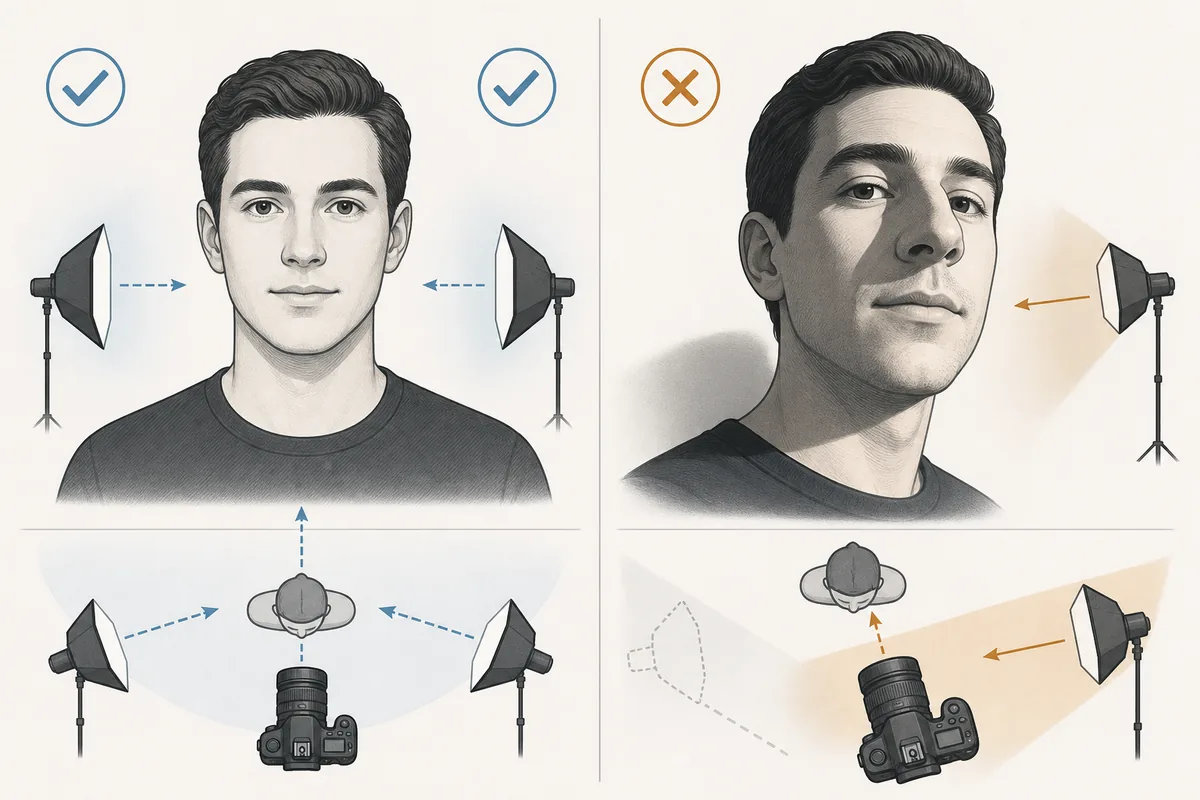
A pretty scale test is sensitive to image input. Small changes in the photo can create larger changes in the result because the model can only measure what it sees.
This is why two honest photos can produce different scores. The tool may not be changing its opinion about you; it may be reacting to shadows, lens distortion, a head tilt, or a smile that changes visible proportions.
-
Camera distance
A close selfie can enlarge the center of the face and narrow the edges, which changes the apparent nose, jaw, and eye spacing. -
Lighting direction
Harsh side light can hide one eye, sharpen shadows, or flatten skin texture, making landmarks harder to read. -
Head angle
A slight turn or tilt can make symmetry look lower even when your face is naturally balanced. -
Expression
A smile, squint, tense mouth, or raised eyebrows changes feature distances and may shift the score. -
Filters and edits
Beauty filters can create a different input face, so the score describes the edited image rather than your natural appearance.
How to Use a Pretty Scale Test More Fairly
If you want a more useful reading, treat the test like a small comparison exercise instead of a one-shot verdict.
Use soft front light
Even lighting helps the AI read both sides of the face without harsh shadows.
Step back from the camera
A little distance reduces selfie lens distortion and creates a more natural portrait.
Keep expression relaxed
A neutral or gentle expression gives a cleaner baseline for comparison.
Compare a small range
Two or three similar photos are more useful than repeatedly chasing the highest score.
After that, look for a range. If your results cluster around the same band, that band is more meaningful than any single number. If the scores swing wildly, improve the photo setup before drawing conclusions.
Pretty Quiz, Pretty Scale, and Am I Ugly Are Different Intents
These searches overlap, but they do not all need the same answer. A person searching for an am I pretty quiz usually wants a quick beauty-rating interpretation. A person searching for am I ugly may be looking for reassurance or a safer way to handle a negative self-check. A person searching for a pretty scale test may be comparing scoring systems or looking for a photo-based calculator.
Keeping those intents separate prevents one page from trying to answer everything. This article focuses on reading pretty-score results. The ugly-test guide focuses more on emotional safety and avoiding harmful overtesting.
| Query | Likely intent | Best content fit |
|---|---|---|
| am i pretty quiz | Interpret a beauty or pretty score | This guide |
| pretty scale test | Understand or compare photo-based scoring | Supporting section here, plus the main test |
| am i ugly | Reassurance and safety around negative self-checking | Am I Ugly Test Guide |
| how normal am i score | Understand the site's score bands | Score Explained |
Want a photo-based reading?
Upload a clear front-facing photo and compare your result with the guidance above.
Try the Am I Pretty TestAm I Pretty Quiz FAQ
About the author
Sarah Mitchell
Beauty tech journalist · 8+ years covering AI and aesthetics
Sarah writes about AI face analysis, beauty technology, and the limits of automated appearance scoring. Her work focuses on helping everyday users understand what facial analysis tools can measure, what they cannot measure, and how to interpret results without overreacting to one number.
References and further reading
- General background on facial averageness and attractiveness research - Averageness overview
- Site guide on interpreting How Normal Am I score bands - Score explained
Last updated: 2026-06-28