Why Do I Look So Bad in Pictures? 6 Reasons Photos Can Feel Unfair
A calm guide to mirror familiarity, camera distance, lighting, angles, expressions, and better ways to judge one photo.

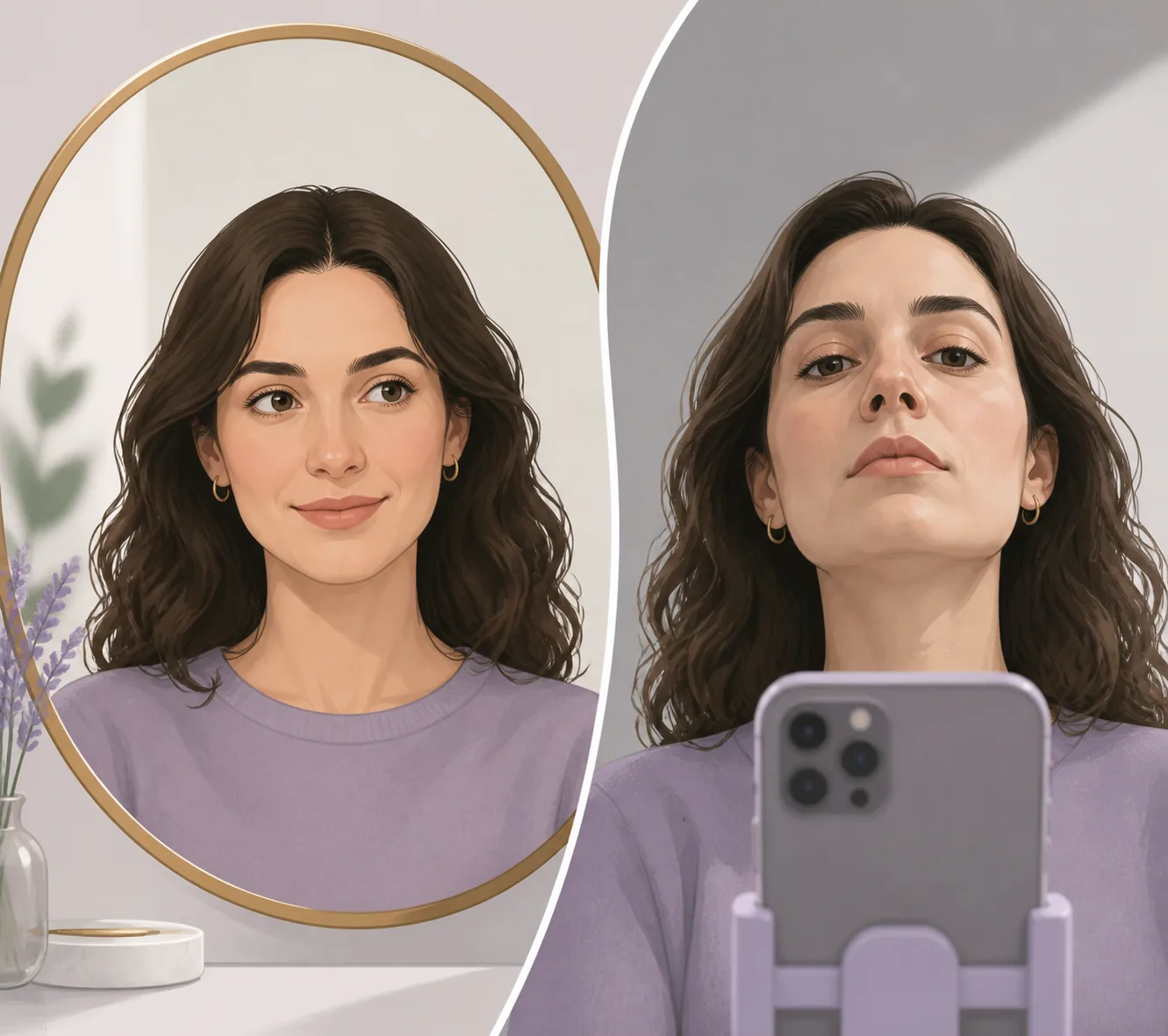
Table of Contents
Why do I look so bad in pictures when I can look fine in the mirror? That reaction is common, and it usually says more about the image conditions than about a sudden change in your face. A photograph removes movement, depth, and the small expressions people normally see in conversation.
A mirror gives you a familiar, reversed view that you have seen many times. A photo may show the unflipped view, a close lens perspective, a split-second expression, and contrast that your eyes would not experience in the same way. Your brain can read that unfamiliar combination as “bad” before you have judged it calmly.
This guide separates optical reasons from emotional interpretation. It explains why a photo can look harsh, how to make a fairer comparison, and why one unflattering picture cannot prove that you look unattractive in real life.
Short Answer: Why Do I Look So Bad in Pictures?
The short answer is that a picture is a narrow sample, not a complete view of your appearance. The camera records a fixed angle, focal length, distance, light pattern, expression, and moment. Change any one of those variables and the same person can look noticeably different.
The mirror adds another layer: it is usually reversed, live, and familiar. You see yourself moving and adjust your expression without noticing. A saved photo is unedited evidence of one frame, but it is not automatically more truthful than the mirror.
A useful rule
Treat a bad photo as feedback about that photo first. Check the camera distance, angle, light, expression, and timing before making a conclusion about your face.
Why a Mirror and Photo Feel So Different
Mirror familiarity is one reason a photograph can feel wrong even when the image is technically clear. You have likely spent years seeing your face reversed in a mirror. Friends and other people usually see the non-reversed version, so a normal photo can look unfamiliar simply because the arrangement is not the one your brain expects.
The mirror is also a moving view. You naturally choose a comfortable distance, adjust your posture, and see your face across many tiny moments. A camera chooses one frame. If that frame catches a blink, a tense mouth, a lowered chin, or a shadow under the eyes, the picture can feel much harsher than your everyday appearance.
| Variable | What changes in the image | What to remember |
|---|---|---|
| Mirror familiarity | You see a reversed, moving version of yourself every day. | Unfamiliar does not automatically mean worse. |
| Camera distance | Near features can look larger than side features in a close selfie. | Step back before judging proportions. |
| Light direction | Shadows can deepen under the eyes, nose, and chin. | Try soft light from in front of you. |
| Head angle | A small tilt changes which side is closer to the lens. | Keep the phone near eye level for comparisons. |
| Moment and expression | A blink, half-smile, or tense mouth can be frozen. | One frame is not your full range of expression. |
Camera Distance Can Change Facial Proportions
A close phone camera does not just make your whole face larger; it changes the relative size of near and far features. The nose and center of the face are closer to the lens than the ears and sides of the head, so a very close selfie can exaggerate the middle of the face while making the outer proportions feel narrower.
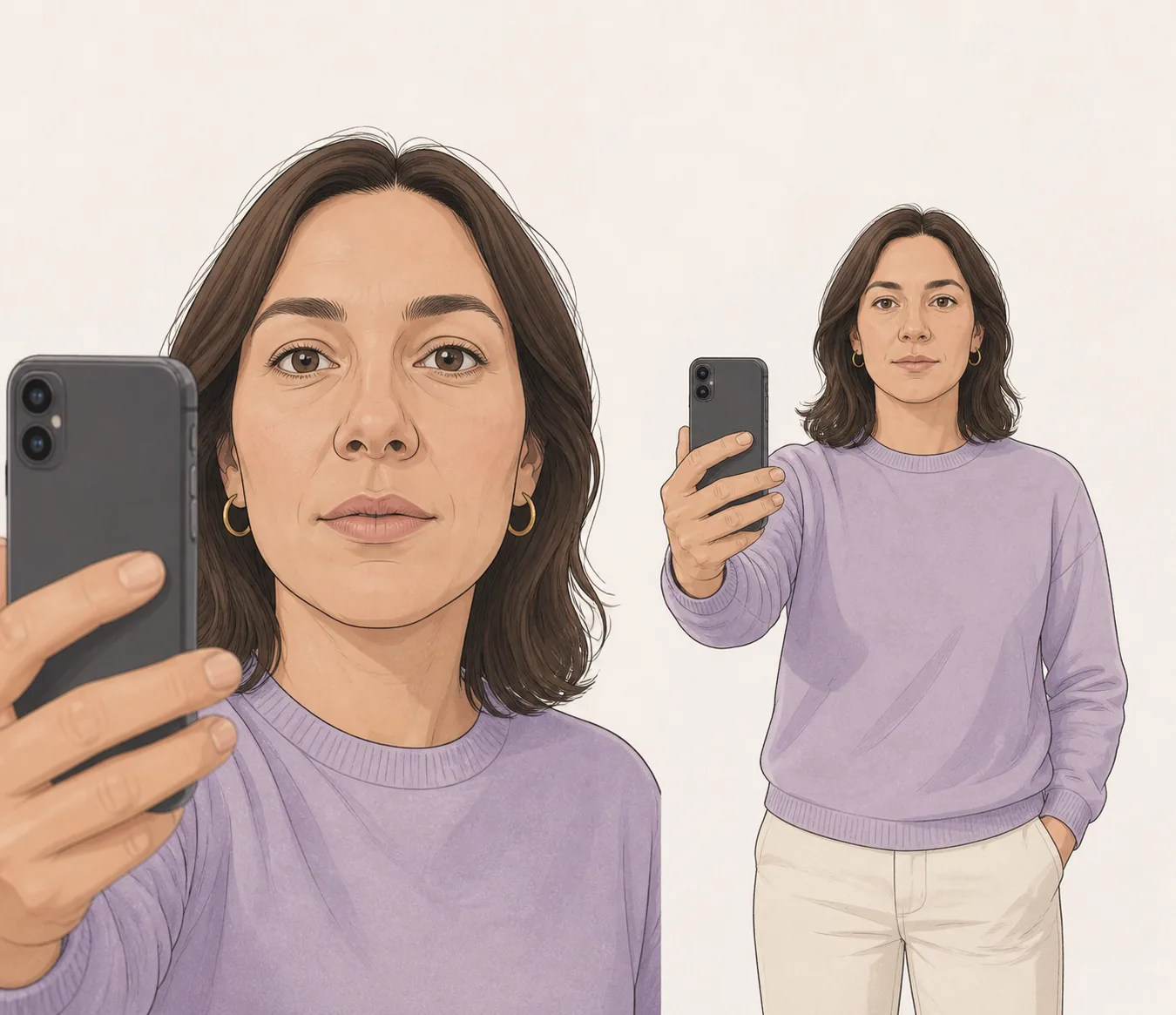
This is perspective, not a permanent change. The farther the camera is from you, the less dramatic the difference between near and far features becomes. You do not need expensive equipment: stepping back, keeping the phone near eye level, and using a modest crop can create a more natural portrait.
- Very close selfie: can make the nose, lips, or center of the face feel more prominent.
- Farther portrait: usually preserves a calmer relationship between central and side features.
- Digital zoom or crop: changes framing, but it cannot fully undo perspective created at the original distance.
Four Other Reasons a Photo Can Feel Unfair
Camera distance is only one variable. When people ask why they look bad in photos, these smaller changes often matter just as much:
Hard or overhead light
Strong light from above can deepen shadows around the eyes, nose, and chin. Front-facing, softer light usually gives the camera cleaner edges and a less dramatic contrast pattern.
A small angle shift
Turning or tilting your head changes which side of the face is closer to the lens. A low camera can also emphasize the underside of the chin, while a high camera changes the apparent shape of the eyes and jaw.
A frozen expression
A photo can catch half a smile, a blink, tightened lips, or a moment of tension. Those expressions are normal in motion but can look unusually serious when frozen.
Timing and processing
Fast shutter timing, HDR, sharpening, compression, and a candid moment can make a picture look harsher than the live scene. A social app may also crop or process the image again.
None of these factors means every photo is inaccurate. It means a single frame contains many choices and accidents. The fair question is not “Is this my real face?” but “What conditions produced this particular frame?”
How to Take a Fairer Face Photo
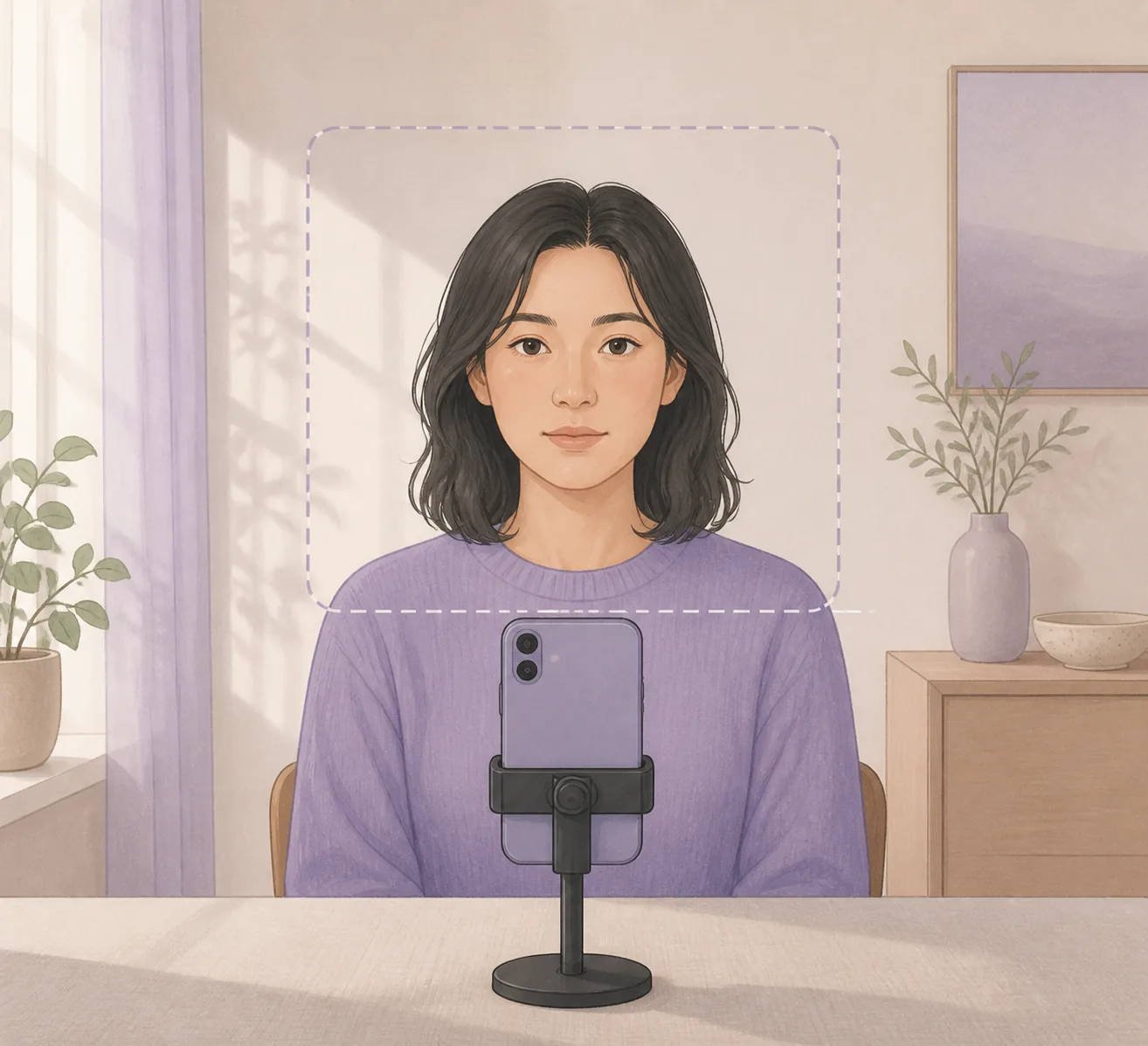
If you want to compare photos or use an AI face test, make the input repeatable. The goal is not to create a perfect image; it is to reduce avoidable noise so the comparison is easier to interpret.
| Step | What to do | Why it helps |
|---|---|---|
| 1 | Place the phone near eye level and step farther back. | Reduces perspective exaggeration and extreme low or high angles. |
| 2 | Use soft, even light from in front of your face. | Keeps shadows from hiding landmarks or changing contrast. |
| 3 | Keep your head level and use a relaxed, neutral expression. | Makes the comparison less dependent on pose or a caught moment. |
| 4 | Avoid beauty filters, slimming tools, and heavy sharpening. | Prevents the camera or app from changing the input. |
| 5 | Take two or three similar photos in the same setup. | Shows a range instead of letting one unlucky frame dominate. |
| 6 | Stop when the check becomes repetitive or upsetting. | More images do not guarantee more certainty or a kinder conclusion. |
Take two or three photos under the same conditions and compare the range, not just the most flattering result. If the range changes dramatically, the setup is still noisy. If the images stay reasonably similar, you have a better reference point—but still not a complete measure of attractiveness or personal worth.
What One Bad Photo Cannot Prove
A picture can show how you appeared in one captured moment. It cannot establish all of the following:
- that your face looks bad from every angle or in every kind of light;
- that other people see you exactly as the camera processed you;
- that a mirror, a phone, or an AI score can define your attractiveness objectively;
- that an asymmetry visible in one pose is a medical problem;
- that you need to keep retaking photos until you feel certain about your appearance.
If checking photos is making you more distressed rather than more informed, pause the comparison. A practical guide can explain camera behavior, but it cannot replace supportive conversation or professional help when appearance worries start controlling your day.
Want a calmer reference point?
Upload a clear, natural photo and use the result as one limited reference—not a final judgment about how you look.
Try the Free Face TestFrequently Asked Questions
About the Author
Sarah Mitchell
Beauty tech journalist · 8+ years covering AI and aesthetics
Sarah writes about AI face analysis, beauty technology, and the limits of automated appearance scoring. Her work helps readers separate what a camera records from the much bigger question of how a person looks and feels in real life.
References & Context
- Study summary on how short camera distance can change perceived nasal proportions — PubMed study
- Research article on selfie perspective distortion and facial proportions — Full-text research article
Last updated: August 7, 2026
Back to How Normal Am I