Am I Ugly Test? How to Read an AI Face Result Safely
A calm guide for anyone searching how ugly am I, worried about one photo, or trying to understand an AI face rating without turning it into a personal verdict.

Table of Contents
Searching for an am I ugly test usually means more than simple curiosity. You may be worried about one selfie, comparing yourself with other people, or trying to get a clear answer because your own view feels unreliable.
That is exactly why the result needs context. AI can compare visible face patterns in a photo, but it cannot see your movement, warmth, voice, style, confidence, or how people respond to you in real life.
This guide explains what a free AI face rating can answer, what it cannot answer, and how to read a score without letting one image become a personal label.
What Can an Am I Ugly Test Actually Answer?
A face rating tool is strongest when your question is about the uploaded image: is the face clear, balanced, front-facing, and close to common facial proportions in this photo?
It is much weaker when your question is emotional: am I acceptable, will people like me, or is something wrong with me? Those questions need human context, not another score.
| Search question | What AI can answer | Better next step |
|---|---|---|
| Am I ugly in this photo? | Partly. It can rate visible face patterns and photo quality. | Retest with a clear front-facing photo and compare the range. |
| How ugly am I from 1 to 10? | Only narrowly. A number reflects one image and one scoring model. | Read the score bands and avoid treating one number as identity. |
| Am I unattractive in real life? | No. Still images miss movement, voice, grooming, style, and chemistry. | Use trusted feedback and broader context, not only AI. |
| Why do I keep feeling ugly? | No. A face tool cannot assess body image distress or mental health. | Pause retesting and consider talking with someone qualified if it feels repetitive or painful. |
Why Photo Quality Can Change an Ugly Test Result
Most AI face ratings score the image, not an ideal version of your face. A close selfie can widen the nose, a tilted head can change symmetry, and side light can make normal texture look harsher.
If a result feels surprisingly low, check the photo conditions before judging yourself.
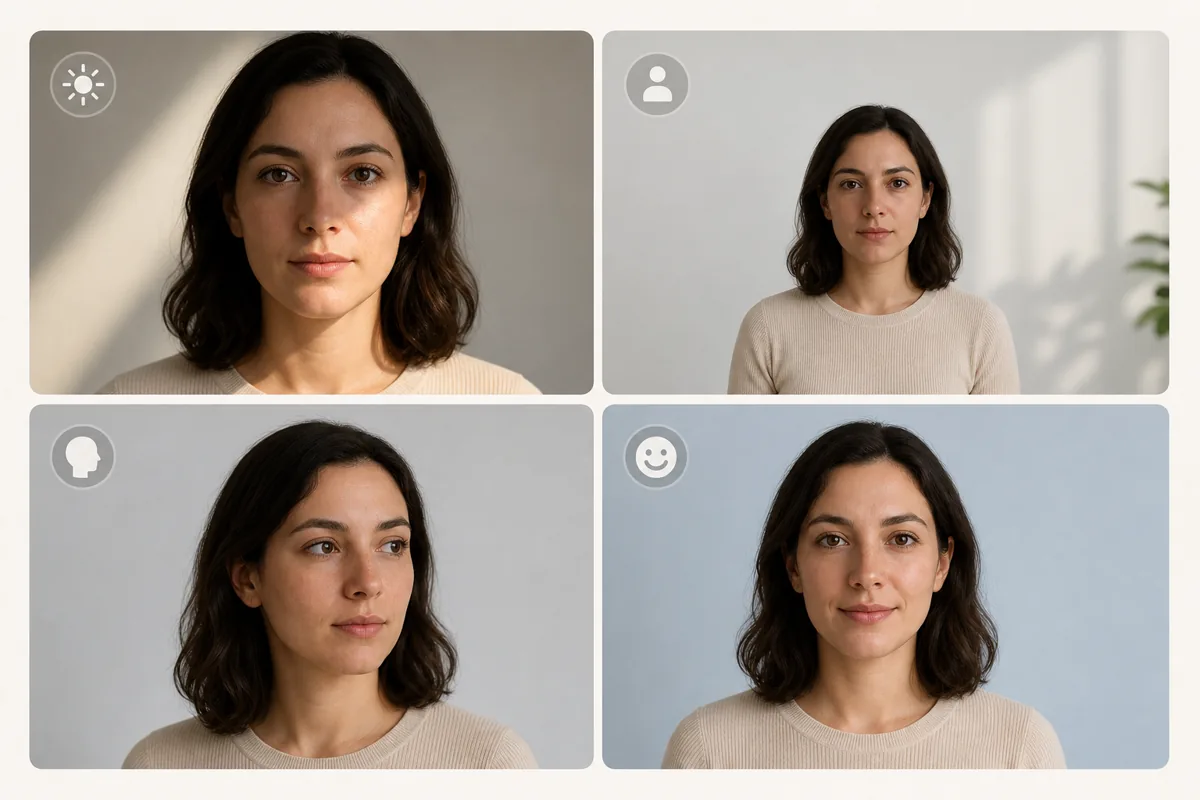
- Use soft front-facing light instead of harsh side shadows.
- Move the camera back slightly to reduce selfie distortion.
- Keep your head level and face the camera directly.
- Use a relaxed expression and avoid filters or beauty modes.
- Compare two or three similar photos instead of trusting one score.
What Does an Ugly Test Score Really Mean?
A low or middle score is not proof that you are ugly. It usually means the model found less symmetry, less landmark clarity, stronger photo distortion, or proportions that differ from its average pattern.
Even when a score is technically consistent, it is still a simplified output. Real attractiveness includes expression, grooming, posture, confidence, voice, humor, and the situation you are in.
Healthy interpretation
Treat the result as a photo-quality and face-pattern signal. Do not use it to decide whether you are worthy, lovable, or safe to be seen.
How to Use an Am I Ugly Test Safely
The safest use is structured and limited. Decide what you want to learn before uploading, then stop once the result answers that narrow question.
Set a narrow goal
Use the test to check whether a photo is clear or whether angle and lighting affect the rating.
Look for a range
A cluster of similar scores across fair photos is more useful than one dramatic result.
Avoid repeated checking
If you keep retesting for reassurance, the tool may be feeding anxiety rather than answering a question.
Keep human context
People experience you through movement, conversation, warmth, styling, and presence, not only facial geometry.
If the question feels heavy, urgent, or hard to stop thinking about, step away from testing and talk with a trusted person or qualified professional.
Try a photo-based face rating carefully
Upload a clear selfie, read the result as one signal, and use the guides above to keep the score in context.
Start the Free TestFrequently Asked Questions
About the Author
Sarah Mitchell
Beauty tech journalist · 8+ years covering AI and aesthetics
Sarah writes about AI face analysis, beauty technology, and the limits of automated appearance scoring. Her work helps readers use face analysis tools with context, privacy awareness, and healthier expectations.
References & Context
- American Psychological Association overview of body image - APA body image topic
- Academic overview of facial attractiveness and averageness - Averageness overview
Last updated: 2026-06-24
Back to How Normal Am I